
Maximizing ROI: Strategic Design Secrets for Small NYC Apartments

The ROI of Small: Strategic NYC Design Ideas That Actually Add Value
In New York City, we don't measure space in feet; we measure it in inches. Whether you are overlooking the cobblestones of the West Village or the skyline from a Long Island City condo, you know that every square inch of your home carries a price tag - often exceeding $1,500 per square foot. As the spring real estate market heats up and homeowners look to maximize their investments, the conversation often turns to "decorating."
But there is a distinct difference between decorating a space and strategically designing it for equity.
At Studio Ness, we practice what we call "Functional Luxury." Led by Tyson Ness, our philosophy bridges the gap between lifestyle joy and tangible property appreciation. If you want to move the needle on your home's appraisal, you must transition from cosmetic "chattel" to strategic renovation. Here is how to unlock the hidden value in your NYC footprint.
Real Property vs. Chattel: The Secret to High-Yield Renovations
One of the most common mistakes NYC homeowners make is confusing furniture with value. From an appraisal standpoint, a $10,000 store bought bookshelf is "chattel" - personal property that leaves with you. It adds exactly $0 to your home’s valuation.
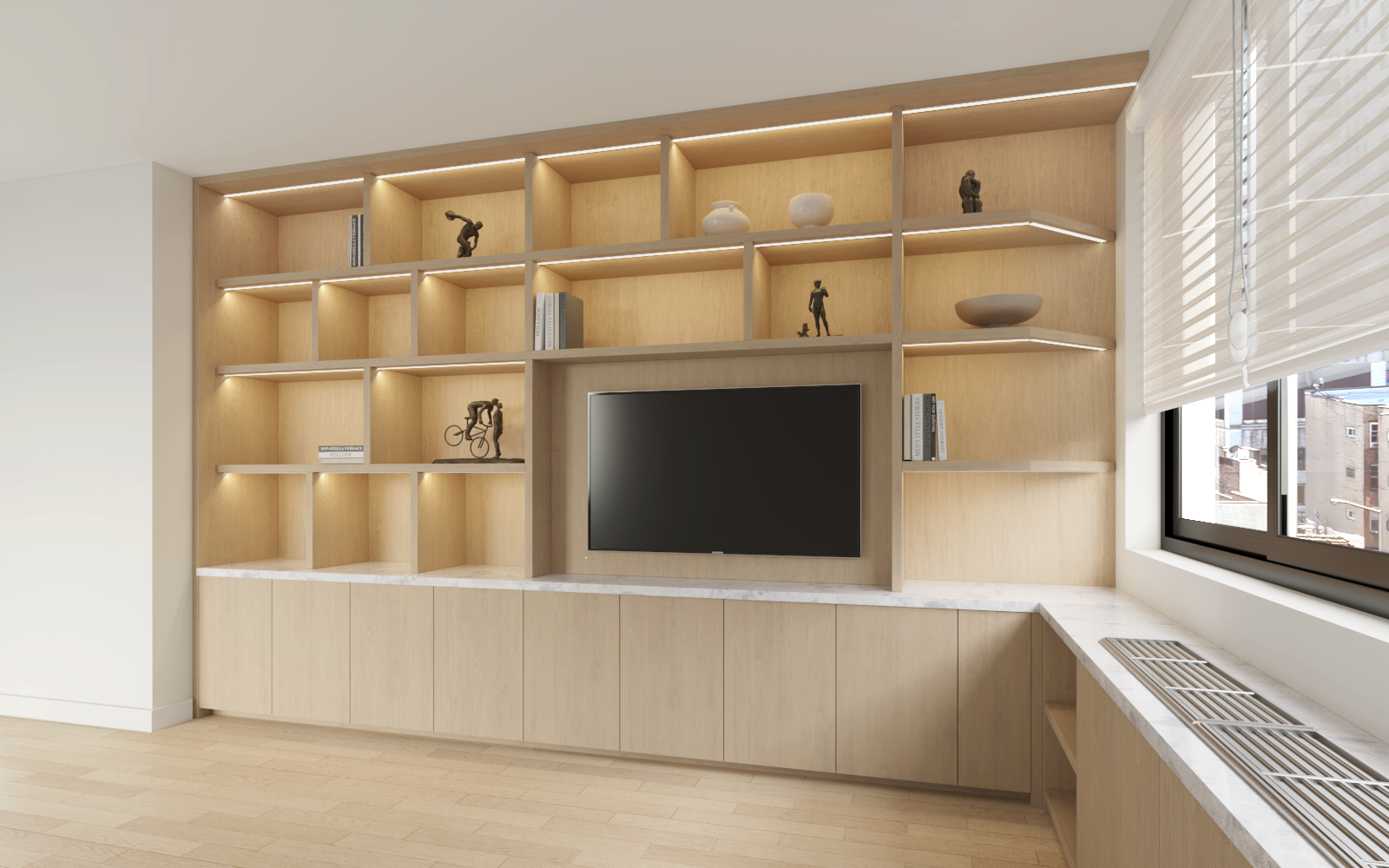
However, $20,000 invested in custom, floor-to-ceiling millwork is considered "Real Property." Because it is permanently affixed to the structure, it becomes part of the real estate. In a city where storage is the ultimate luxury, high-end built-ins don't just organize your life; they can often return double their cost in perceived and appraised value. At Studio Ness, we specialize in utilizing NYC’s unique verticality. By designing millwork that reaches toward 9-foot-plus ceilings, we create "found" square footage that buyers are willing to pay a premium for.
The “Junior-1” Strategy: The 15% Value Leap
If you own a studio with a windowed alcove or an oversized floor plan, you are sitting on a potential goldmine. The "Junior-1" conversion is perhaps the single most effective way to increase ROI in a small Manhattan or Brooklyn apartment.
By installing a legal glass and steel partition, you transform a studio into a one-bedroom. Data across neighborhoods like Brooklyn Heights shows that a one-bedroom consistently commands a 15–20% price premium over a studio of the same square footage.
However, this isn't as simple as putting up a wall. NYC Building Code is notoriously strict regarding "light and air" requirements and legal egress. You cannot sacrifice a secondary exit or a required window and call it a bedroom. We help out as spatial strategists, helping to navigate the complex intersection of DOB codes and strict Co-op or Condo boards to ensure your "Junior-1" is not just beautiful, but legal and appraisable.
“Micro-Luxury” in the Kitchen and Bath
In a 500-square-foot apartment, the kitchen and bathroom are your "power rooms." Because the footprints are small, you can afford to use the world’s finest materials without the budget spiraling out of control. This is where "Micro-Luxury" thrives.
The Seamless Line Theory
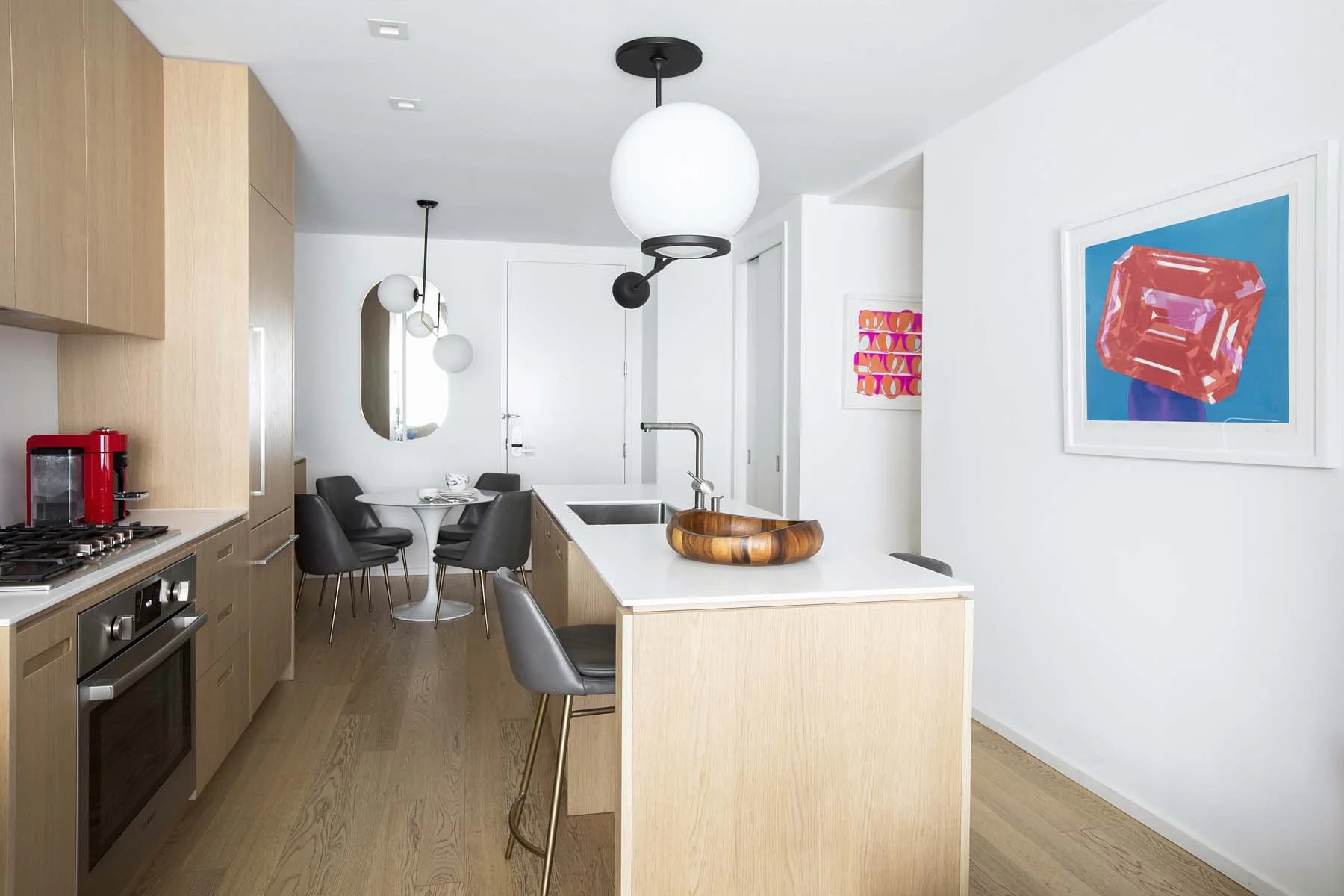
Nothing shrinks a small kitchen faster than a bulky, protruding stainless steel refrigerator. We advocate for panel-ready appliances. By integrating your fridge and dishwasher behind custom cabinetry, you eliminate visual "clutter." This creates a continuous line that makes a small kitchen feel infinite and high-end.
Invisible Upgrades
Value isn't always something you can see. During a "wet-over-dry" renovation (moving plumbing or expanding a bathroom), we often recommend upgrading the "bones." Increasing your electrical amps to support high-induction cooking or installing high-efficiency, slim-profile climate control (like mini-splits or upgraded PTAC units), if your building will allow, removes the "pain points" that cause buyers to lower their offers.
The “Holy Grails” of NYC Amenities: In-Unit Laundry
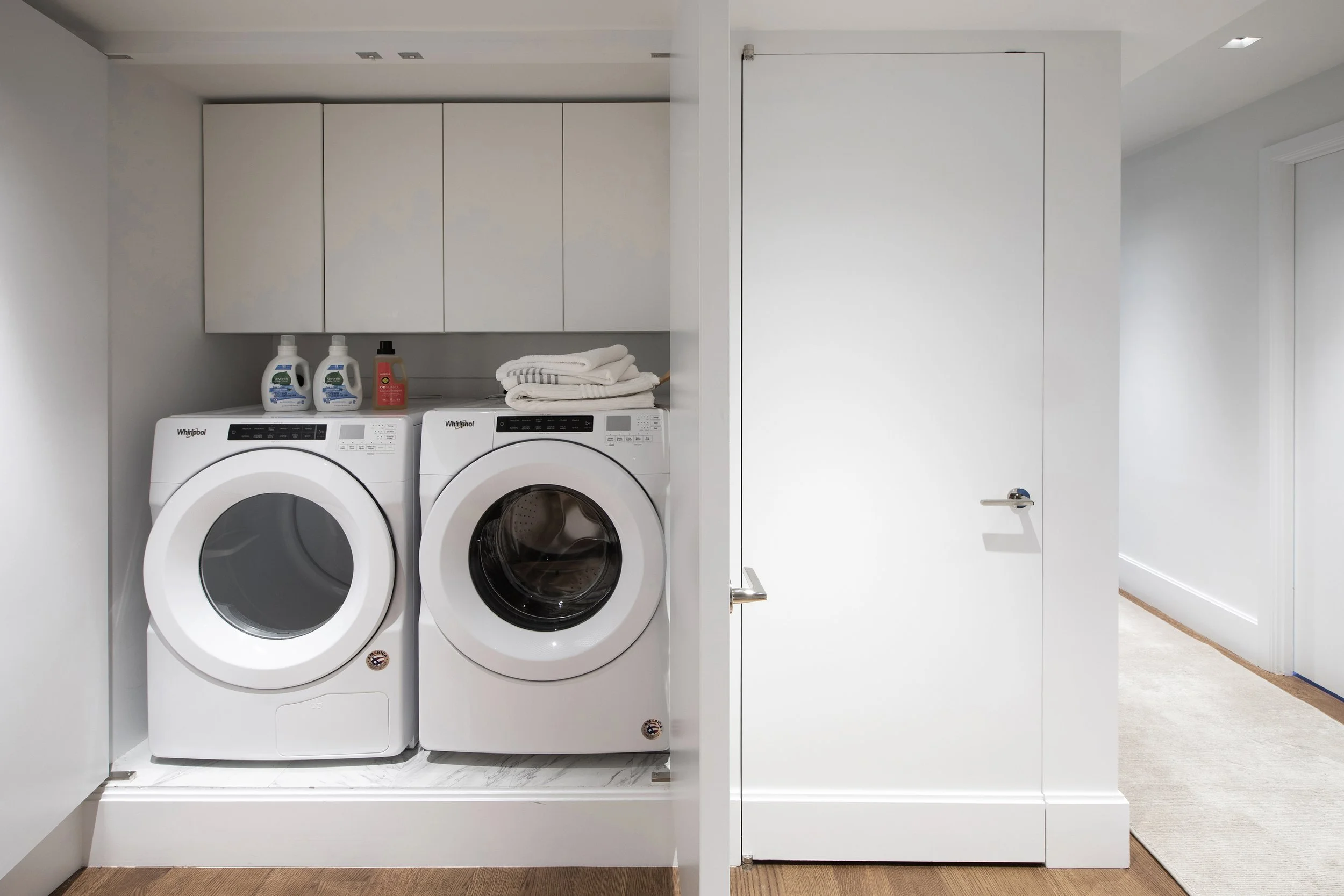
If you ask any NYC broker what the #1 value-add is for a small apartment, the answer is unanimous: an in-unit washer and dryer. Even in a small studio, finding a closet or a kitchen nook to house a ventless, heat-pump dryer and washer combo can increase your resale value by tens of thousands of dollars.
The challenge, of course, is the "Red Tape." Many older buildings have "wet-over-dry" rules, meaning you cannot place a laundry unit over a neighbor's bedroom or living room. Studio Ness helps to assemble the team to guide and conduct studies and board packages required to turn this "Holy Grail" into a reality, ensuring all leak sensors and automatic shut-off valves meet the highest insurance standards.
Design Psychology: Manipulating Perception
Strategic design uses psychology to change how a buyer feels the space. While "all-white" is the default for small spaces, it can often feel sterile and flat. We prefer monochromatic schemes or "dark for depth" techniques. Painting a recessed wall or a small foyer a deep, saturated hue can actually push the walls back visually, creating a sense of mystery and expanse. Covering the entire room in a singular color, even a light neutral, also helps to craft a cohesive residence that feels expansive and finished.
Furthermore, we utilize mirrors as structural elements rather than mere accessories. An oversized, floor-to-ceiling antiqued mirror doesn't just "reflect light" - it doubles the perceived square footage of a dining area or a narrow hallway, making the apartment feel twice as grand the moment a guest walks through the door. Placing the mirror opposite the window also helps to draw and multiply natural light, making the overall feel of the interior more airy and brighter.
Navigating the Red Tape: Your Alteration Agreement
You can have the most brilliant design in the world, but in NYC, you cannot add a single dollar of value without an approved Alteration Agreement. This document is the contract between you and your building's board.
Navigating the bureaucracy of boards, architects, and permits is where many DIY renovations fail. A "stop-work" order is the fastest way to turn an investment into a liability. At Studio Ness, we position ourselves as your advocate. Along with the architect, we help handle the technical drawings, the board submissions, and the management of high-end contractors so you can focus on the vision while we protect your equity.
From a Studio to a Stunner
In New York City, you don't just live in your apartment; you invest in it. High-value design is a sophisticated blend of legal layout changes, custom "real property" storage, and micro-luxury finishes that appeal to the city’s most discerning buyers.
Whether you are looking to stay for a decade or sell in a year, your home should work as hard for you as you do for it. ROI is also not just for your immediate resale needs, but for your quality of life ROI. Living in an optimized and outfitted residence will help you remain more organized, and provide you room to catch your breath once you return home from hectic NYC life.
Ready to turn your NYC footprint into a high-value asset? Studio Ness combines boutique design with a deep, technical understanding of New York real estate. We are here to discuss your value-add renovation and discover how we can elevate your home’s lifestyle and legacy, all you have to do is reach out, below.